
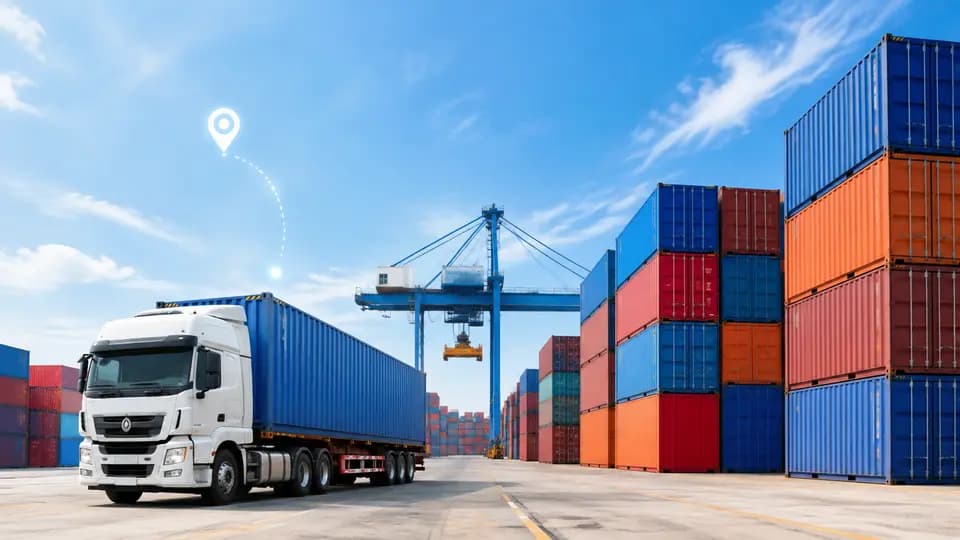
Why do containers and trailers require independent positioning?
Containers and trailers undergo multiple handovers between trucks, yards, ports, and warehouses—and many assets lack continuous external power. FOFN’s GPS tracking solution for containers and trailers integrates wireless or solar-assisted tracking terminals, enabling users to view asset location, movement history, dwell areas, and device status on the platform—providing actionable insights for transportation and asset handover.
Which management actions does it support?
Logistics providers, freight forwarders, trailer pool operators, yard managers, leasing companies, and intermodal project teams can centrally manage terminals by asset ID, region, or task. Geofences can be configured for ports, warehouses, customer sites, and handover points to verify arrivals, departures, abnormal dwell times, or unplanned movements.
How to select the right device?
Containers without fixed power supply require evaluation of battery capacity, reporting frequency, and mounting location. Solar-assisted power is recommended for long-term outdoor or stationary assets. Metal enclosures, stacking configurations, and network coverage may affect positioning accuracy and data transmission—terminal placement and communication conditions should be verified prior to installation.
Functional Areas:
Location & Trajectory ViewView current asset location, historical movement routes, and dwell areas based on device reporting intervals.
Handover Zone ManagementDefine zones such as ports, yards, warehouses, and customer premises to verify asset arrivals and departures.
Unplanned Movement AlertsTerminals with relevant capabilities can trigger alerts for unauthorized movement or tampering—functionality depends on model configuration.
Dwell Status VerificationCross-reference historical location data and geofence events to identify prolonged dwell at designated locations.
Battery & Device StatusMonitor low-battery, offline, and other device statuses to schedule charging, maintenance, or inspections.
Multi-Asset Centralized ManagementManage multiple container and trailer terminals by asset ID, customer, region, or transport task.